The Beijing Opera Mask: How Colors and Patterns Reveal the Hidden Stories of Chinese Characters
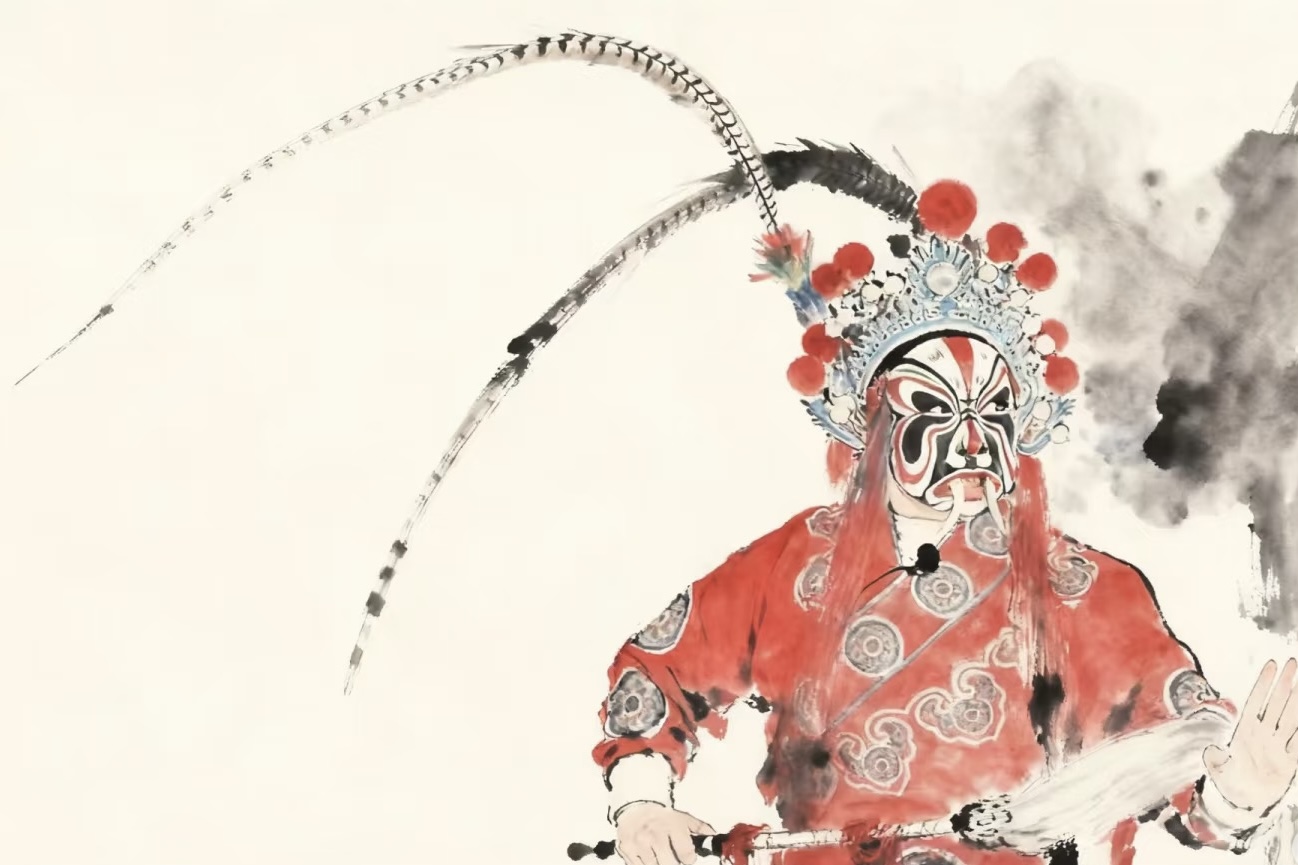
The Beijing Opera Mask: How Colors and Patterns Reveal the Hidden Stories of Chinese Characters
Discover the Secret Language Behind China’s Most Famous Traditional Performance Art
Introduction: A Face That Tells a Story Before a Word Is Spoken
Imagine sitting inside an old theater in Beijing.
The lights slowly become darker.
The sound of traditional instruments fills the room.
A performer walks onto the stage wearing a colorful costume.
But before he says a single word, the audience already knows something about him.
They know whether he is brave or dangerous.
They know whether he is loyal or ambitious.
They know whether he is a hero, a warrior, a wise official, or a complicated character.
How?
Through his face.
Painted in powerful colors and carefully designed patterns, the face of a Beijing Opera performer is not simply makeup.
It is a visual language.
Every color has meaning.
Every line has a purpose.
Every pattern tells a story.
This is the magic of the Beijing Opera mask, one of the most fascinating elements of China’s traditional performing arts.
For visitors from other countries, Beijing Opera can seem mysterious at first.
The singing style is unfamiliar.
The movements are highly symbolic.
The costumes are completely different from Western theater.
But once you understand the meaning behind the painted faces, the performance becomes much easier to appreciate.
A red face is not just red.
A black face is not just black.
A white face is not just white.
Each one represents a personality, a history, and a story that has been passed down for generations.
The Beijing Opera mask is more than a decoration.
It is a window into Chinese culture, showing how ancient Chinese people understood character, morality, and human nature.
Why Do Beijing Opera Performers Paint Their Faces?
The Face Is a Language Without Words
In modern movies and television, audiences can quickly understand characters through dialogue, camera angles, and special effects.
But traditional Chinese opera developed in a very different world.
Hundreds of years ago, audiences needed a simple and powerful way to understand characters on stage.
The answer was face painting.
Before a performer spoke, the audience could already understand important information:
- Is this person good or evil?
- Is this character brave or dishonest?
- Is he a loyal general or a clever politician?
The painted face became a shortcut to understanding personality.
This was especially important because Beijing Opera performances often tell stories from Chinese history and literature.
Many characters are based on famous figures that audiences already knew.
The face design helped people immediately recognize them.
A performer did not need to explain:
“I am a loyal warrior.”
The color and pattern on his face already communicated that message.
Face Painting Is Not Makeup — It Is Symbolic Art
Every Line Has Meaning
To modern visitors, Beijing Opera faces may look similar to masks.
However, there is an important difference.
The patterns are painted directly onto the performer’s face.
This means every performance requires skill, patience, and artistic ability.
Performers must learn:
- How to combine colors
- How to create traditional patterns
- How to express personality through design
The face becomes a canvas.
But unlike ordinary painting, the goal is not beauty alone.
The goal is storytelling.
A successful Beijing Opera face allows the audience to understand the character instantly.
The Secret Meaning Behind Every Color
Red Face: Loyalty, Courage, and Honor
Red is one of the most famous colors in Beijing Opera.
A red face usually represents a character who is:
- Loyal
- Brave
- Honest
- Strong-minded
One of the most famous examples is Guan Yu, a legendary general from the historical period of the Three Kingdoms.
Guan Yu is remembered in Chinese culture as a symbol of loyalty and righteousness.
His red face represents his powerful personality and moral character.
For Chinese audiences, seeing a red face immediately creates certain expectations:
This person is probably honorable.
This person can be trusted.
This person stands for justice.
Black Face: Strength and Justice
A black face represents another type of personality.
Characters with black faces are often:
- Strong
- Honest
- Direct
- Fearless
Black does not represent evil in Beijing Opera.
This is an important difference from some Western traditions.
Instead, black often represents a person who is straightforward and refuses to compromise.
These characters may not be elegant or politically skilled, but they are often respected because they represent honesty and fairness.
White Face: Intelligence, Strategy, and Hidden Intentions
The white face is one of the most interesting symbols in Beijing Opera.
Unlike red and black faces, white often suggests a more complicated personality.
Characters with white faces are usually:
- Intelligent
- Clever
- Strategic
- Difficult to understand
Sometimes they represent villains or characters with hidden ambitions.
This does not mean every white-faced character is simply “bad.”
Instead, white represents complexity.
These characters may be intelligent and talented, but they may use their abilities for personal goals.
For audiences, the white face creates curiosity:
Can this person be trusted?
What is he really planning?
Blue and Green Faces: Powerful and Unusual Characters
Blue and green faces are less common but equally meaningful.
They often represent characters who are:
- Strong-willed
- Independent
- Rebellious
- Different from ordinary people
These colors are often used for warriors, supernatural characters, or figures with unusual personalities.
They show that Beijing Opera does not divide characters only into heroes and villains.
Human nature is more complicated.
The Art of Reading a Person Through a Face
Understanding Chinese Ideas of Character
The painted faces of Beijing Opera reflect traditional Chinese ideas about personality and morality.
In many Chinese stories, a person’s actions reveal their character.
Someone who values loyalty, courage, and responsibility is respected.
Someone who uses intelligence selfishly may be viewed with suspicion.
The face paintings make these ideas visible.
The audience does not need a long explanation.
They can see personality through color and design.
This is one reason Beijing Opera is so powerful.
It combines:
- Visual art
- History
- Music
- Acting
- Philosophy
into one performance.
The Characters Behind the Masks
More Than Actors — They Become Historical Figures
Many Beijing Opera stories come from Chinese history and classical literature.
The performers may play:
- Famous generals
- Kings
- Officials
- Warriors
- Mythical characters
Some characters have existed in Chinese culture for hundreds or even thousands of years.
For example, stories from:
- Romance of the Three Kingdoms
- The Water Margin
- Historical legends
continue to appear on Beijing Opera stages.
For Chinese audiences, these characters are not strangers.
They are cultural memories.
Beijing Opera and Chinese History
A Theater Where History Comes Alive
Beijing Opera is not only entertainment.
It is also a way of preserving history.
Before modern education became widespread, traditional performances helped ordinary people learn stories from the past.
Through opera, audiences could understand:
- Famous battles
- Moral lessons
- Historical events
- Traditional values
A performance was not only something to watch.
It was also a cultural lesson.
How Beijing Opera Became a Symbol of Beijing
From Imperial Entertainment to National Culture
Beijing Opera developed during the Qing Dynasty and became especially popular in Beijing.
The city became the center of this art form.
For many years, performances were connected with imperial culture.
Later, Beijing Opera spread beyond the palace and became popular among ordinary people.
Over time, it became one of China’s most recognized cultural symbols.
Today, when people around the world think about traditional Chinese theater, Beijing Opera is often the first image that comes to mind.
Why Foreign Travelers Find Beijing Opera Fascinating
A Completely Different Way of Storytelling
For many Western visitors, Beijing Opera feels very different from European theater.
Western theater often focuses on:
- Realistic acting
- Natural dialogue
- Detailed scenery
Beijing Opera uses a different approach.
Instead of trying to create reality, it uses symbols.
A few movements can represent an entire journey.
A small stage can become a battlefield, palace, or mountain.
A painted face can reveal a person’s entire personality.
This symbolic style is what makes Beijing Opera unique.
How to Experience Beijing Opera as a Traveler
Learn the Basics Before Watching
For first-time visitors, Beijing Opera may seem confusing.
Learning a few simple ideas can greatly improve the experience.
Before watching, understand:
- The meaning of face colors
- The role of costumes
- The importance of gestures
Once you know what to look for, the performance becomes much more interesting.
Watch the Details, Not Only the Story
Many visitors focus only on understanding the plot.
But Beijing Opera is about more than the story.
Pay attention to:
- Facial expressions
- Hand movements
- Body language
- Music rhythms
Every movement has meaning.
A simple gesture can represent an emotion or action.
Experience the Preparation Behind the Performance
One of the most fascinating parts of Beijing Opera is seeing the preparation.
Creating a face design can take significant time.
Performers must carefully apply:
- Colors
- Lines
- Patterns
The transformation from ordinary person to historical character is part of the art itself.
The Modern Life of Beijing Opera
An Ancient Tradition in a Changing World
Like many traditional arts, Beijing Opera faces challenges in modern society.
Today, many young people are more interested in:
- Movies
- Pop music
- Digital entertainment
However, Beijing Opera continues to survive through innovation and education.
Modern performers are finding new ways to introduce this art to younger generations and international audiences.
Some performances include:
- Shorter versions
- Cultural explanations
- Modern stage design
The goal is not to change the tradition completely.
It is to help more people understand its beauty.
Why the Beijing Opera Mask Matters Today
A Symbol of Chinese Creativity
The painted face represents something larger than theater.
It represents a unique way of thinking.
Chinese culture has often used symbols to express ideas.
A dragon represents power.
A flower represents beauty.
A painted face represents personality.
The Beijing Opera mask continues this tradition.
It shows how art can communicate ideas without using many words.
Final Thoughts: A Painted Face Is a Window Into Chinese Culture
The Great Wall shows China’s determination.
The Forbidden City shows China’s imperial history.
The Temple of Heaven shows China’s connection between humans and the universe.
But the Beijing Opera mask shows China’s imagination.
A single face can tell a story.
A single color can reveal a personality.
A single performance can carry centuries of history.
For travelers visiting Beijing, experiencing Beijing Opera is not simply watching a show.
It is discovering a different way of understanding people, stories, and culture.
Behind every painted mask is a character.
Behind every character is a story.
And behind every story is a tradition that has survived for hundreds of years.