Is a Private Guide Worth It for Visiting Beijing’s Historic Sites?
Is a Private Guide Worth It for Visiting Beijing’s Historic Sites?
Is a Private Guide Worth It for Visiting Beijing’s Historic Sites?
From ancient walled capital to a hyper-modern, power-charged megacity, Beijing (Běijīng, 北京) spins a breathless yarn of triumph, tragedy, endurance, and innovation. It is a city of staggering proportions. Here, six-lane ring roads loop around concrete skyscrapers, while at its core lies the world’s largest palace complex, surrounded by a labyrinth of grey-brick alleys that have survived the rise and fall of dynasties.
For any traveler, stepping into Beijing is an exhilarating assault on the senses. But as you plan your journey through its monumental past—from the sheer geometric perfection of the Temple of Heaven to the crumbling, wild ridges of the Great Wall—a crucial question arises:
Should you navigate this sprawling cradle of Chinese culture independently, or is a private guide the ultimate key to unlocking its secrets?
In this comprehensive guide, we dissect the realities of exploring Beijing’s historic heavyweights, weigh the pros and cons of hiring private expertise, and help you decide which approach matches your travel style.
The Landscape of Beijing’s History
To understand why guiding is such a hot topic in Beijing, one must first grasp the scale of what is on offer. Beijing doesn’t do “small.” Its historic sites are massive, highly regulated, deeply symbolic, and layered with centuries of esoteric court philosophy.
The Major Sights: DIY vs. Guided
Let’s look at how a private guide alters the experience at Beijing’s most iconic historic landmarks.
1. The Forbidden City (The Palace Museum)
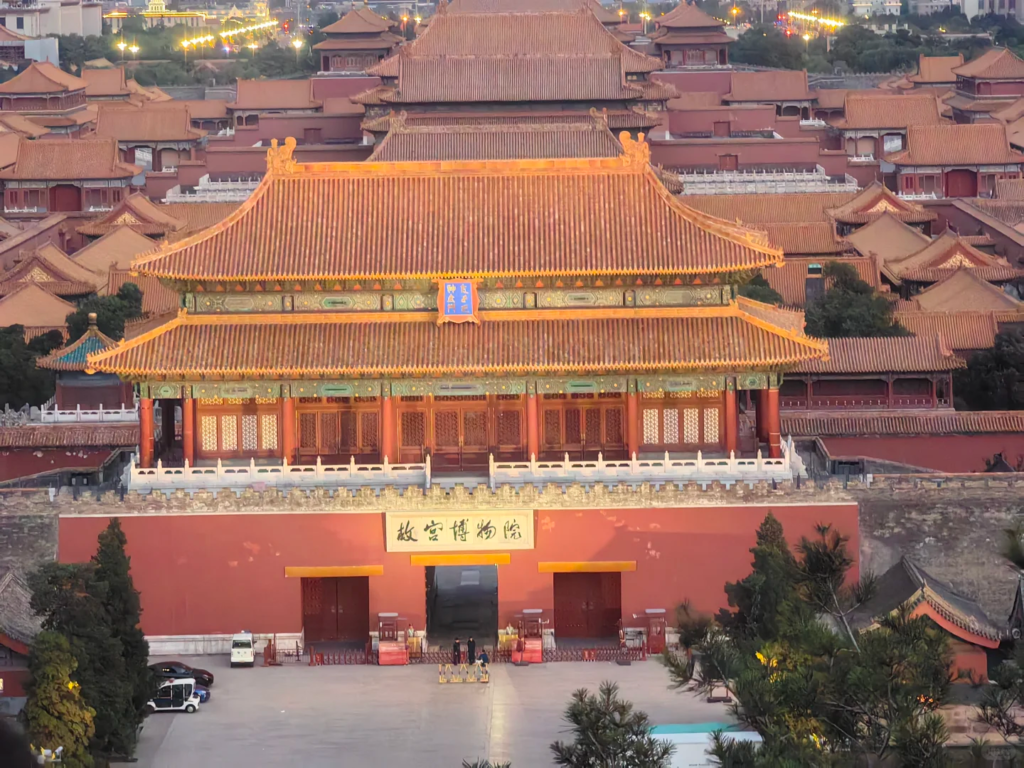
The world’s largest palace complex was constructed between 1406 and 1420 by more than a million laborers. For 500 years, it was the reclusive home to 24 emperors of the Ming and Qing dynasties. Today, it is a bewildering fortress of yellow-tiled roofs, vast courtyards, and red walls.
| THE FORBIDDEN CITY AT A GLANCE |
| [ Meridian Gate (Wu Men) ] <– Entry Point |
| [ Outer Court ] ———– (Hall of Supreme Harmony) |
| | (Hall of Central Harmony) |
| | (Hall of Preserving Harmony) |
| [ Inner Court ] ———– (Palace of Heavenly Purity) |
| (Hall of Union) |
| (Palace of Earthly Tranquility) |
| [ Imperial Garden ] ——- (Classical landscaping) |
| [ Gate of Divine Prowess ] <– Exit Point |
The DIY Experience: Navigating the central axis independently is relatively straightforward. You walk from south to north, swept along by a massive tide of domestic tourists. Excellent multi-language audio guides (narrated by the likes of Roger Moore) can be rented at the entrance. However, you are strictly on your own when it comes to booking tickets—which must be secured online exactly seven days in advance through a highly competitive real-time booking system that requires passport details and often sells out within minutes.
The Private Guide Advantage: A seasoned guide is a buffer against the chaos. They don’t just handle the stressful ticketing logistics; they know exactly when to deviate from the crowded central axis into the quieter eastern and western wings (such as the Treasure Gallery or the Clock Gallery), where the true intrigue of the inner court took place. Instead of generic architectural facts, a guide fills the empty spaces with stories of plotting eunuchs, powerful concubines, and the dramatic downfall of Puyi, the Last Emperor.
Lonely Planet Insider Tip: If you do go independent, make sure you don’t leave right after exiting the northern gate. Cross the street and climb the hill at Jingshan Park. From the top pavilion, you get an unparalleled, bird’s-eye view of the Forbidden City’s golden roofs layout—and you can see the exact tree where the last Ming emperor hanged himself as rebels breached the city walls.
2. The Great Wall of China
Winding across the rugged mountains north of the city, the Great Wall is the ultimate Chinese bucket-list experience. But “The Great Wall” isn’t just one place; it’s a collection of sections, each offering a fundamentally different experience.
| CHOOSING YOUR GREAT WALL EXPERIENCE |
| [ Badaling / Mutianyu ] ———— [ Jiankou / Gubeikou ] |
| (Restored, accessible, cable cars) (Wild, unrestored, adventurous) |
| Best for families, easy walking Best for hikers, photographers |
The DIY Experience: Reaching restored sections like Mutianyu independently involves navigating a combination of subways, express buses, or tourist shuttle transfers. It is entirely doable for an enterprising independent traveler, but it devours time and energy before you even step onto the wall. Reaching “wild,” unrestored sections like Jiankou or Gubeikou via public transit is a logistical nightmare that often requires multiple local bus transfers and negotiating with village drivers.
The Private Guide Advantage: This is where a private guide and vehicle yield the highest return on investment. A guide eliminates the transit headache entirely, picking you up directly from your hotel lobby. On the way, they provide historical context about the Ming dynasty’s defense strategies against northern nomadic tribes. More importantly, on the wall itself, they act as safety monitors on steep, slippery sections and ensure you avoid the aggressive souvenir vendors at the base.
3. The Temple of Heaven
Located in the southern part of Dongcheng, this park is the ultimate expression of the eternal Chinese quest for cosmic harmony. It is a masterpiece of Ming architecture where emperors came during the winter solstice to fast, pray, and perform complex rituals to ensure a bountiful harvest.
| THE TEMPLE OF HEAVEN LAYOUT |
| [ Round Mound Altar ] —- (Three-tiered marble terrace) |
| [ Imperial Vault ] ——- (Circular building; Echo Wall) |
| [ Danbi Bridge ] ——— (Raised imperial walkway) |
| [ Hall of Prayer ] ——- (Triple-gabled masterpiece) |
The DIY Experience: The structures themselves are visually stunning and highly photographic. You can easily stroll through the grounds, admire the triple-gabled, deep-blue tiled roof of the Hall of Prayer for Good Harvests, and experiment with the acoustics of the Echo Wall.
The Private Guide Advantage: The Temple of Heaven is a dense puzzle of ancient
cosmology, numerology, and sacred geometry. Why are the northern walls rounded and the southern walls square? (Because ancient Chinese cosmology viewed heaven as round and earth as square). Why do the stairs, balustrades, and structural elements always appear in multiples of nine? (Because nine is the ultimate yang number, representing the Emperor). A guide translates these abstract concepts into clear, fascinating insights. Furthermore, a local guide will introduce you to the living history of the park: the early-morning gatherings of Beijing seniors practicing t’ai chi, playing jianzi (shuttlecock), and performing traditional opera under the cypress trees.
4. The Summer Palace (Yíhéyuán)
Situated in the northwestern Haidian district, the Summer Palace is China’s most fantastical imperial garden. Dominated by the vast expanse of Kunming Lake and the steep slopes of Longevity Hill, it served as an opulent summer retreat where the royal family could escape the stifling heat of the Forbidden City.
| THE SUMMER PALACE HIGHLIGHTS |
| [ Longevity Hill ] (Temples & Pavilions) |
| [ The Long Corridor ] —- (728-meter painted walkway) |
| [ Kunming Lake ] ——— (Boat rides; Seventeenth Arch Bridge) |
| [ The Marble Boat ] —— (Cixi’s controversial pavilion) |
The DIY Experience: The Summer Palace is incredibly beautiful and serves as an excellent spot for leisurely independent exploration. You can buy a ticket, rent a pedalo boat on Kunming Lake, stroll along the 728-meter Long Corridor to admire its thousands of unique traditional paintings, and marvel at the famous Marble Boat.
The Private Guide Advantage: Much of the palace’s current layout is inextricably linked to the controversial Empress Dowager Cixi, who famously siphoned off funds earmarked for the imperial Chinese navy to rebuild this dream retirement home. A private guide brings this fascinating, iron-willed historical figure to life, explaining the court politics, extravagance, and tragedy that unfolded behind these scenic lakeside views. A guide also optimizes your walking route, ensuring you hit the key pavilions without wearing yourself out on the sprawling grounds.
The Hutongs: A Different Kind of History
Beyond the grand palaces lies Beijing’s true soul: the hutongs. These narrow, maze-like alleyways date back to the Yuan dynasty and are lined with traditional siheyuan (courtyard homes).
| ANATOMY OF A TRADITIONAL SIHEYUAN |
| [ North Room ] |
| (Head of Household) |
| [ West Room ] ———+——— [ East Room ] |
| (Sons / Family) | (Daughters / Family) |
| [ Courtyard ] |
| [ South Room ] |
| (Servants / Gym) |
| [ Main Gate ] (Southeast corner) |
Exploring the hutongs around Houhai Lake or the Bell and Drum Towers independently is highly recommended for soaking up the atmosphere. You can wander past elderly men playing xiangqi (Chinese chess), discover hidden hipster cafes, and smell the aroma of roasting lamb skewers.
However, a private guide offers something money can rarely buy on its own: access. Many of the finest old courtyard homes are hidden behind closed doors and high thresholds. A well-connected local guide can arrange entry into a private family siheyuan, where you can sit down with a multi-generational resident, sip jasmine tea, and learn firsthand about the rapid transformation of Beijing street life over the decades.
Weighing the Pros and Cons
To help you decide if a private guide fits your travel style and budget, let’s break down the core advantages and drawbacks:
The Pros
Effortless Logistics: Beijing’s major historic sites now operate on strict, dynamic online reservation systems. A private tour company handles all real-time ticket bookings, passport registrations, and transit logistics, completely eliminating administrative stress.
Cultural Context & Interpretation: Chinese historical sites are heavily symbolic. A guide acts as a cultural translator, decoding architectural cues, spiritual philosophies, and complex dynastic timelines that aren’t obvious to the naked eye.
Language Barrier Bridge: While English signage has improved significantly across major Beijing attractions, navigating food menus, directional signs, and sudden changes in site operations can still be challenging. A bilingual guide keeps your day running seamlessly.
Crowd & Time Management: Beijing’s top sights attract tens of thousands of domestic visitors daily. Experienced guides know the exact flow of the crowds, the quietest times to visit specific halls, and the most efficient walking paths to maximize your energy.
The Cons
Significantly Higher Cost: Hiring a qualified, licensed private guide along with a private vehicle and driver is a premium service. For budget travelers or solo backpackers, it can represent a major financial investment compared to public transit and independent exploration.
Reduced Spontaneity: A guided tour operates on a structured itinerary. If you discover a charming cafe or an interesting side alley and want to sit and people-watch for three hours, doing so is much harder when you are on a set schedule with a guide.
The Risk of “Shopping Stops”: Some low-cost or poorly vetted tour operators still attempt to steer travelers toward state-run jade factories, silk mills, or tea ceremonies where high-pressure sales tactics are common.
How to Avoid the Shopping Trap: When choosing an inbound travel provider or private guide, look for explicit “No Shopping / Pure Sightseeing” (无购物) guarantees. Reputable agencies charge a transparent, premium upfront rate for their expertise, ensuring your time is spent exploring history rather than navigating tourist gift shops.
The Verdict: Is a Private Guide Worth It?
The answer isn’t a simple yes or no; it depends entirely on your travel profile, budget, and priorities.
|
Travel Profile |
Recommended Approach |
Why? |
|
The Solo Adventurer & Budget Backpacker |
Go Independent (DIY) |
Beijing’s public transportation network is fast, clean, and highly affordable. Armed with an eSIM, translation apps, and a bit of patience, you can navigate the city independently while keeping costs to a minimum. |
|
The Time-Crunched Traveler (2–3 Days) |
Hire a Private Guide |
When your time in the capital is limited, you cannot afford to waste half a day figuring out bus connections to the Great Wall or missing out on Forbidden City tickets. A guide ensures you hit every major highlight smoothly and efficiently. |
|
Families & Multi-Generational Groups |
Hire a Private Guide & Vehicle |
Navigating crowded subways and walking immense distances across historic plazas can quickly exhaust children and elderly relatives. A private vehicle provides vital air-conditioned comfort and flexibility between sites. |
|
The Deep-Dive Culture & History Buff |
Hire a Private Guide |
If you want to look past the surface level and truly understand the philosophical foundations, court dynamics, and architectural symbolism of imperial China, the real-time insights of a local expert are irreplaceable. |
The Hybrid Compromise: The Best of Both Worlds
If you remain torn, the ideal strategy for many travelers visiting Beijing is a hybrid itinerary:
1.Book a private guide and driver for the heavy-duty logistical days: Use professional services for a seamless excursion out to a remote section of the Great Wall, combined with a highly curated tour of the Forbidden City.
2.Keep your remaining days completely open for independent exploration: Set aside time to rent a bicycle, wander freely through the atmospheric hutongs, explore the vibrant 798 Art District, and sample local culinary classics like jianbing (savory crepes) or authentic Peking Duck at your own relaxed pace.
3.By balancing expert-led curation with independent discovery, you can experience both the grand imperial majesty and the intimate, living heartbeat of China’s captivating capital.
Are you planning a trip to Beijing soon, or are you looking to customize an itinerary for a specific type of traveler? Let me know what aspects you’d like to explore further!