How to Visit the Forbidden City Without the Crowds (Expert Tips)
How to Visit the Forbidden City Without the Crowds (Expert Tips)
How to Visit the Forbidden City Without the Crowds (Expert Tips)
At 8:30 AM, the massive vermilion doors of the Meridian Gate (Wumen) swing open, and a collective gasp rises from the crowd. For a fleeting moment, the vast, cobblestone courtyard of the world’s largest palace complex lies empty, bathed in the soft, horizontal light of a Beijing morning. Then, the floodgates open. Within minutes, a sea of neon tour caps, megaphones blasting distorted history, and selfie sticks claim the central axis.
To the unprepared traveler, the Forbidden City can feel less like an ancient imperial sanctuary and more like a crowded subway station at rush hour. With over 19,000 buildings and 720,000 square meters of history, this UNESCO World Heritage site sees millions of visitors annually.
But it does not have to be an ordeal of endurance.
As inbound travel professionals, we know the secret: the Forbidden City is not a single, static monument, but a living labyrinth. By mastering the geography of the palace, hacking the ticketing bureaucracy, and understanding the rhythm of the crowds, you can step off the beaten track and find yourself utterly alone with the ghosts of the Ming and Qing dynasties.
Here is your ultimate guide to reclaiming the silence of the Son of Heaven.
1. The Logistics: Beating the System Before You Arrive
The battle for a peaceful visit to the Forbidden City is won or lost days before you ever step foot near the moat. China’s digital-first tourism ecosystem requires strategy, speed, and a bit of insider knowledge.
How to Visit the Forbidden City Without the Crowds (Expert Tips)
At 8:30 AM, the massive vermilion doors of the Meridian Gate (Wumen) swing open, and a collective gasp rises from the crowd. For a fleeting moment, the vast, cobblestone courtyard of the world’s largest palace complex lies empty, bathed in the soft, horizontal light of a Beijing morning. Then, the floodgates open. Within minutes, a sea of neon tour caps, megaphones blasting distorted history, and selfie sticks claim the central axis.
To the unprepared traveler, the Forbidden City can feel less like an ancient imperial sanctuary and more like a crowded subway station at rush hour. With over 19,000 buildings and 720,000 square meters of history, this UNESCO World Heritage site sees millions of visitors annually.
But it does not have to be an ordeal of endurance.
As inbound travel professionals, we know the secret: the Forbidden City is not a single, static monument, but a living labyrinth. By mastering the geography of the palace, hacking the ticketing bureaucracy, and understanding the rhythm of the crowds, you can step off the beaten track and find yourself utterly alone with the ghosts of the Ming and Qing dynasties.
Here is your ultimate guide to reclaiming the silence of the Son of Heaven.
1. The Logistics: Beating the System Before You Arrive
The battle for a peaceful visit to the Forbidden City is won or lost days before you ever step foot near the moat. China’s digital-first tourism ecosystem requires strategy, speed, and a bit of insider knowledge.
The 8:00 PM Ticket Sprint
Tickets are strictly capped and must be booked in advance via the official Palace Museum WeChat mini-program or the booking website.
The Professional Hack: For foreign travelers, booking through the official English website or utilizing a registered agency (like your inbound operator) is highly recommended.
Ensure your passport details are entered with absolute accuracy—your passport is your ticket; there are no paper tickets.
Set an alarm for 7:58 PM Beijing Time seven days before your planned visit. By 8:05 PM, peak season tickets are entirely gone.
The Security Bypass: The “East/West Gate” Approach
Most tourists take the subway to Tiananmen East or Tiananmen West and queue at the main security checkpoints on Chang’an Avenue. These lines can take up to two hours during peak seasons.
Insider Tip: Avoid Tiananmen Square entirely. Instruct your Didi or taxi to drop you at Donghuamen (East Flower Gate) or Xihuamen (West Flower Gate). From either gate, walk along the shaded pathways lining the majestic moat toward the Meridian Gate. You will completely bypass the gridlocked security checks on the main avenue and arrive at the ticket gates fresh and unbothered.
2. The Strategy of Time: Choosing Your Window
The standard tour group itinerary is incredibly predictable. They arrive between 8:30 AM and 10:00 AM, march directly up the central axis, and exit through the north gate by noon to head to a lunch spot. By understanding this rhythm, you can carve out windows of near-perfect solitude.
TYPICAL CROWD DENSITY BY TIME OF DAY
08:30 AM | █░░░░░░░░░ (Low – Golden Hour Sprint)
10:00 AM | ██████████ (Peak – The Tour Group Wave)
12:30 PM | █████░░░░░ (Medium – Lunchtime Dip)
02:30 PM | ██████░░░░ (Medium-High)
03:30 PM | ██░░░░░░░░ (Low – The Golden Afternoon)
Option A: The Early Bird Sprint (8:30 AM – 9:30 AM)
If you want to experience the sheer scale of the central courtyards without a soul in your frame, you must be at the front of the security line at the Meridian Gate by 8:00 AM. When the gates open at 8:30 AM, do not linger. Walk briskly past the Inner Golden River Bridges and the Gate of Supreme Harmony. Most visitors stop immediately to take photos. By bypassing these initial sights, you can reach the Hall of Supreme Harmony (Taihedian) and stand before its grand terrace alone for about fifteen glorious minutes.
Option B: The Afternoon Lull & Twilight Exit (1:30 PM – Close)
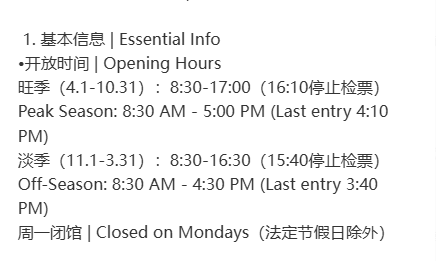
For a more relaxed experience, enter the palace after 1:30 PM. The morning tour groups have departed, and the midday heat (in summer) keeps others at bay. As the afternoon progresses, the light turns a deep, honey gold, casting long shadows across the red walls. By 3:30 PM, the Palace Museum begins to feel empty. The last entry is at 3:10 PM (winter) or 4:10 PM (summer). Hanging back in the side courtyards as the guards begin to gently sweep visitors toward the exits allows you to experience the Forbidden City as it was meant to be seen: silent, melancholic, and deeply majestic.
3. The Geometry of Solitude: Ditching the Central Axis
The Forbidden City is built on a strict central axis designed to reflect the cosmic order. Unfortunately, 90% of visitors stick to this axis like iron filings to a magnet. To escape the crowds, you must master the art of the lateral escape.
[ NORTH GATE – EXIT ]
| WESTERN | CENTRAL | EASTERN
| PALACES | AXIS | PALACES
| (Quiet, | (EXTREMELY | (Quiet,
| Shady | CROWDED) | Intimate)
| Courtyards) | | |
[TREASUR GALLERY]
(Tranquil, | Must-Pay)
[ SOUTH GATE – ENTRY ]
The West Wing: The Zen of the Empress Dowager
Directly west of the central axis lies a labyrinth of narrow lanes, high walls, and shaded courtyards that housed the emperors’ consorts and the influential Empress Dowagers.
Palace of Benevolent Tranquility (Cininggong): This area boasts beautifully landscaped gardens with ancient pines, a rare spot of greenery inside the stony palace. It is frequently deserted, offering stone benches where you can sit and listen to the wind rustling through the pines.
Hall of Consoling Joy (Shoukangong): The former residence of Qianlong’s mother. The exhibition here is beautifully curated, offering an intimate glimpse into the domestic life of the Qing court, completely free of megaphone-wielding crowds.
The East Wing: Scholars, Lovers, and Ghosts
The eastern lanes are characterized by intimate, smaller courtyards that feel less like grand administrative spaces and more like residential homes.
Palace of Great Benevolence (Jingrengong) & Palace of Celestial Favour (Chengqiangong): These courtyards feature elegant, peeling paint on wooden pillars and wild pomegranate trees. Here, the scale is human, and you can easily find a corner to read, sketch, or write undisturbed.
The Treasure Gallery (The ultimate 10 RMB Sanctuary)
If there is one absolute “must-do” for the crowd-weary traveler, it is purchasing the supplementary ticket to the Treasure Gallery (Zhenbaoguan), located in the far northeast section (Palace of Tranquil Longevity). Because this area requires a separate ticket (about 10 RMB / $1.50 USD), it acts as a highly effective filter. Most budget-conscious or rushed tour groups skip it entirely. Inside, you will find:
The Nine Dragon Wall: A dazzling, glazed-tile screen of swirling dragons, far more accessible and peaceful than its counterpart in Beihai Park.
The Palace of Tranquil Longevity Garden (Ningshougong Huayuan): A masterpiece of classical Chinese landscape design, featuring exquisite rockeries, winding corridors, and tiny pavilions built for the Qianlong Emperor’s retirement.
The Studio of Exhaustion from Diligent Service (Juanqinzhai): An architectural gem featuring stunning bamboo carvings and trompe-l’œil silk murals on the ceilings, showcasing a fusion of Chinese craftsmanship and European perspective.
4.The Photographer’s Playbook: Capturing the Empty Palace
Getting that pristine, human-free shot of the Forbidden City requires patience, perspective shifts, and a sharp eye for detail.
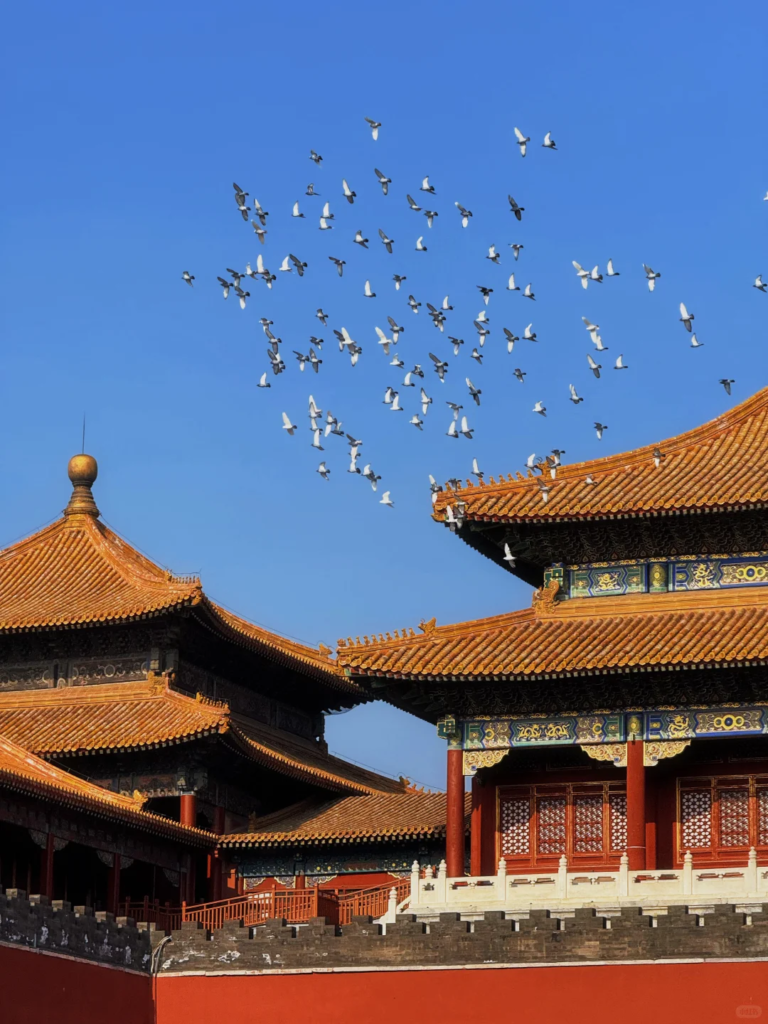
Rule #1: Shoot Up and Shoot Tight When the courtyards are busy, raise your lens. The roofs of the Forbidden City are architectural wonders. Focus on the imperial roof decorated with mythical yellow-glazed ceramic beasts (zou beasts). Frame them against the crisp Beijing blue sky or the dramatic grey clouds of a summer storm.
HOW TO FRAME AN “EMPTY” SHOT IN A CROWDED COURTYARD
[ Roofline & Glazed Beasts ] <– Frame here (100% empty)
| Red Vermilion Wall | <– Crop out crowds below this line
[ Crowd / Tour Guides ] <– Do not include in frame
The Doorway Frame
Use the deep, red-lacquered doorways of the side gates to frame your shots. By standing inside a shaded doorway and shooting out into a sunlit courtyard, you can use high-contrast silhouettes to hide any tourists walking in the background, creating a dramatic, timeless composition.
The “Ghost-Free” Long Exposure
If you carry a travel tripod (note: tripod policies can vary, so check current regulations, or use a sturdy stone balustrade as a makeshift stand), use a Neutral Density (ND) filter. A 10-stop ND filter allows you to take long exposures of 30 seconds or more. Any moving tourists will register as faint, invisible ghosts, leaving the grand, stationary architecture perfectly sharp and completely deserted.
5. Beyond the Moat: The Best External Views
Sometimes, the best way to experience the Forbidden City’s grandeur is to step outside its walls entirely. These two locations offer breathtaking perspectives without the stress of navigating the interior crowds.
Jingshan Park (Coal Hill) at Sunset
Located directly across from the north gate (Gate of Divine Prowess), Jingshan Park is an artificial hill made from the soil excavated to dig the palace moat.
The Experience: Climb the stone steps to the Wanchun Pavilion at the summit.
The Reward: A breathtaking 360-degree panorama of Beijing. Looking south, the golden roofs of the Forbidden City stretch out to the horizon like waves on a gilded sea. At sunset, as the light catches the yellow tiles, the sight is nothing short of spiritual.
The Southeast Turret & The Moat at Sunrise
The four corner towers (turrets) of the Forbidden City are architectural marvels, boasting complex, multi-tiered roofs with nine beams, eighteen pillars, and seventy-two ridges.
The Experience: Head to the Southeast Turret just before sunrise.
The Reward: The water of the moat is often perfectly still, creating a mirror-like reflection of the red turret and the weeping willows that line the bank. You will share the bank only with a few local elders practicing Tai Chi and a handful of dedicated landscape photographers.
6. The Curated “Anti-Crowd” Itinerary
For a flawless, stress-free day, follow this expert-designed, step-by-step route:
07:45 AM | The Arrival: Take a Didi to Donghuamen. Walk slowly along the moat to the Meridian Gate, enjoying the cool morning air.
08:15 AM | The Gate: Join the line at the Meridian Gate (Wumen). Have your passport ready in hand.
08:30 AM | The Sprint: As doors open, walk briskly straight down the center. Snap your unobstructed photos of the Hall of Supreme Harmony within the first 15 minutes.
08:50 AM | The Lateral Escape: Turn right (East) and slip through the gates into the Palace of Ancestral Worship (Fengxiandian) area, home to the Clocks and Watches Gallery.
09:30 AM | The Premium Sanctuary: Enter the Treasure Gallery (extra ticket required). Spend two hours wandering the peaceful gardens of Qianlong, the Opera Stage, and viewing the incredible jade and gold artifacts.
11:30 AM | Lunch & Rest: Enjoy a quiet cup of tea or a light snack at the cafe located near the Palace of Tranquil Longevity.
12:30 PM | The Western Labyrinth: Cross over to the West Wing. Wander the quiet residential quarters of the Empress Dowagers, visiting the Palace of Benevolent Tranquility (Cininggong).
02:30 PM | The Imperial Garden: As the afternoon tour groups thin out, visit the Imperial Garden (Yuhuayuan) at the north end of the palace. Explore the bizarre rock formations, ancient cypresses, and delicate pavilions.
03:30 PM | The Golden Hour Exit: Walk slowly toward the Gate of Divine Prowess (Shenwumen) to exit.
04:00 PM | The Grand Finale: Cross the street into Jingshan Park, climb to the top, and watch the sun set over the empire you just explored in peace.
A Final Word of Advice
To truly appreciate the Forbidden City, one must look beyond the sheer volume of visitors and tap into the scale of its history. This is a place where emperors ruled over a quarter of the world’s population, where court eunuchs whispered political betrayals in narrow alleys, and where dynasties rose and fell like the seasons.
By taking the side paths, waiting for the twilight light, and allowing yourself to slow down, you will find that the ancient heart of China still beats in quiet, beautiful solitude.