Dujiangyan: The Ancient Chinese Engineering Miracle That Still Shapes Sichuan Today
Dujiangyan: The Ancient Chinese Engineering Miracle That Still Shapes Sichuan Today
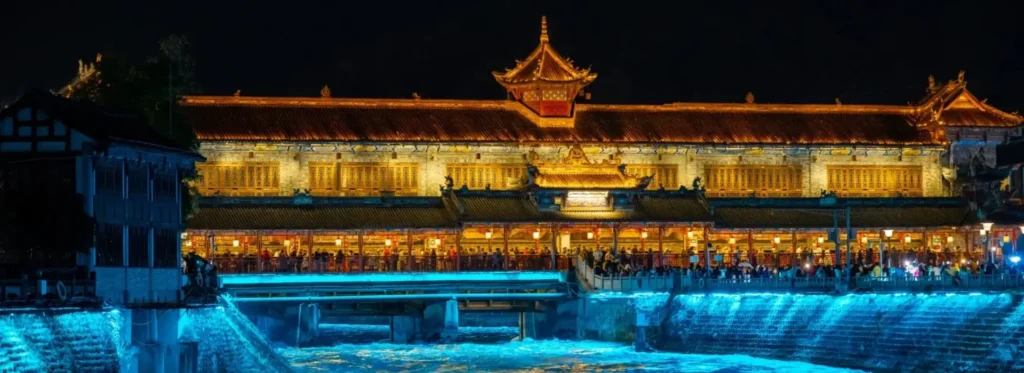
Dujiangyan: The Ancient Chinese Engineering Miracle That Still Shapes Sichuan Today
Discover the 2,000-Year-Old Wonder Where Human Wisdom and Nature Work Together
Some of the world’s greatest engineering achievements are remembered because of their size.
Massive bridges.
Tall skyscrapers.
Huge dams.
But Dujiangyan is different.
It does not rise dramatically into the sky.
It does not overwhelm visitors with its scale.
Instead, it quietly continues doing what it was designed to do more than 2,000 years ago.
It controls water.
It protects communities.
It supports agriculture.
It connects people with nature.
Located near Chengdu in Sichuan Province, Dujiangyan is one of the most remarkable examples of ancient engineering in human history. Built during the Qin Dynasty over two thousand years ago, this incredible irrigation system transformed Sichuan from a region frequently threatened by floods into one of China’s most productive agricultural areas.
Today, Dujiangyan is not only a UNESCO World Heritage Site and a symbol of ancient Chinese innovation.
It is a living example of a powerful idea:
Humans do not have to fight against nature.
They can learn from it and work together with it.
For travelers seeking meaningful cultural experiences in China, Dujiangyan offers something far beyond a historical attraction.
It tells a story about wisdom, sustainability, and the relationship between civilization and the natural world.
The Story of Li Bing: The Visionary Behind Dujiangyan
To understand Dujiangyan, we must first travel back more than 2,000 years.
During the Warring States period, the Sichuan region was rich in natural resources but faced a serious challenge.
The Min River, an important water source flowing from the mountains, frequently caused devastating floods.
During the rainy season, the powerful river could destroy farmland and threaten nearby communities.
During dry seasons, however, farmers struggled with insufficient water for agriculture.
The people needed a solution.
At that time, many engineering projects around the world focused on controlling rivers through force — building walls and barriers to stop water.
But the Chinese engineer and governor Li Bing chose a different approach.
Instead of trying to block the river completely, he studied its natural movement.
He observed the landscape.
He understood the river’s patterns.
He searched for a way to guide the water rather than fight against it.
This idea became the foundation of Dujiangyan.
Ancient Chinese Wisdom: Working With Nature Instead of Against It
The greatest achievement of Dujiangyan is not simply that it controls water.
It is the philosophy behind its design.
The ancient engineers understood something remarkably advanced:
Nature has its own systems.
The best solutions come from understanding those systems.
Rather than building a massive dam to stop the Min River, Li Bing created a network that naturally divides and manages the water flow.
The project includes several important parts:
- Yuzui (Fish Mouth Levee)
- Feishayan (Flying Sand Weir)
- Baopingkou (Bottle-Neck Channel)
Together, these structures create a balanced water management system.
During flood seasons, excess water can flow away safely.
During dry seasons, enough water is directed toward farmland.
The river continues flowing naturally, while human design guides its movement.
This reflects a deep principle of traditional Chinese thought:
Harmony between humans and nature.
How Dujiangyan Works: An Engineering Wonder Without a Dam
For modern visitors, one of the most fascinating things about Dujiangyan is that it does not work like many modern water projects.
There is no giant concrete wall blocking the river.
Instead, the system uses the natural shape of the landscape.
The Fish Mouth Levee divides the Min River into two channels.
One channel carries water toward irrigation areas.
The other continues as the main river flow.
The Flying Sand Weir helps remove excess water and sediment, preventing the system from becoming blocked.
The Bottle-Neck Channel controls the amount of water entering the irrigation network.
Together, these elements create a sustainable system that has continued operating for centuries.
This is why Dujiangyan remains one of the greatest examples of ancient environmental engineering.
It demonstrates that advanced technology does not always mean complexity.
Sometimes the most intelligent solutions are those that work naturally with the environment.
The Transformation of Sichuan: From Flood-Prone Land to the “Land of Abundance”
Before Dujiangyan was built, Sichuan faced serious challenges from unpredictable flooding.
After its completion, everything changed.
The irrigation system provided reliable water for agriculture and transformed the Chengdu Plain into one of China’s most fertile regions.
Over generations, Sichuan became known as the “Land of Abundance” because of its rich agricultural production.
Rice fields expanded.
Communities grew.
Trade developed.
Cities flourished.
The success of Chengdu’s civilization is closely connected with the wisdom behind Dujiangyan.
For visitors, understanding this connection makes the experience even more meaningful.
Dujiangyan is not just a water project.
It is the reason an entire region was able to prosper.
Water Culture in Sichuan: A River That Created a Civilization
In Sichuan, water has always been more than a natural resource.
It is part of the region’s identity.
The Min River shaped local agriculture, traditions, and daily life.
The success of Dujiangyan created a special relationship between people and water.
Unlike cultures where rivers are seen mainly as dangerous forces to control, Sichuan developed a philosophy of cooperation with water.
This idea appears throughout local culture.
From farming traditions to festivals.
From architecture to daily lifestyles.
Water represents life, connection, and prosperity.
For travelers, visiting Dujiangyan offers a chance to understand how geography has shaped Sichuan’s culture over thousands of years.
Dujiangyan Today: A 2,000-Year-Old System Still Working
One of the most extraordinary facts about Dujiangyan is that it is not simply an ancient monument.
It is still functioning today.
More than two thousand years after its construction, the irrigation system continues to provide water management benefits for the Chengdu Plain.
This makes Dujiangyan unique among historical sites around the world.
Many ancient structures survive only as ruins.
Dujiangyan remains alive.
It continues performing the purpose for which it was created.
This living connection between past and present is what makes the experience so powerful.
Visitors are not looking at history from a distance.
They are witnessing a piece of ancient innovation that still influences modern life.
Exploring Dujiangyan: More Than an Engineering Site
Although the irrigation system is the main attraction, the surrounding area offers many cultural experiences.
A visit to Dujiangyan allows travelers to explore history, religion, nature, and local life together.
Erwang Temple: A Tribute to Ancient Wisdom
Located near the irrigation system, Erwang Temple is dedicated to Li Bing and his son, who played important roles in creating Dujiangyan.
The temple sits among beautiful mountain scenery and traditional architecture.
Walking through its courtyards, visitors can learn about the people behind this incredible achievement.
The temple represents more than historical respect.
It represents admiration for knowledge, responsibility, and service to society.
Qingcheng Mountain: Combining Nature and Spiritual Culture
Not far from Dujiangyan lies Qingcheng Mountain, one of China’s most famous Taoist mountains.
Many travelers combine these two destinations because they represent two important aspects of Sichuan culture:
Dujiangyan represents human wisdom and cooperation with nature.
Qingcheng Mountain represents spiritual harmony with nature.
Together, they create a deeper understanding of traditional Chinese philosophy.
Ancient Towns and Local Life Around Dujiangyan
Beyond historical sites, visitors can explore nearby towns and experience everyday Sichuan life.
Traditional streets.
Local restaurants.
Tea houses.
River landscapes.
These experiences allow travelers to see how history continues to influence modern communities.
A trip to Dujiangyan is not only about seeing an ancient project.
It is about discovering the lifestyle that grew around it.
Why International Travelers Should Visit Dujiangyan
For international visitors, Dujiangyan offers a unique perspective on China.
Many travelers come to China to see famous landmarks, but places like Dujiangyan reveal something deeper.
They show the ideas behind Chinese civilization.
They demonstrate respect for nature.
They reveal how ancient knowledge continues to shape modern life.
A visit to Dujiangyan is especially meaningful for travelers interested in:
- History
- Engineering
- Sustainability
- Environmental design
- Chinese philosophy
- Cultural heritage
It is an experience that combines education and inspiration.
A Perfect Day Trip from Chengdu
One of the advantages of Dujiangyan is its accessibility from Chengdu.
After experiencing Chengdu’s modern lifestyle, famous cuisine, and vibrant culture, travelers can easily continue their journey into the surrounding region.
Within a short distance, they can discover a completely different world:
Ancient engineering.
Mountain landscapes.
Traditional temples.
Quiet rivers.
This makes Dujiangyan one of the best cultural experiences for visitors staying in Chengdu.
Final Thoughts: A Lesson From 2,000 Years Ago
Dujiangyan is more than an ancient irrigation system.
It is a message from history.
It tells us that human progress does not always come from controlling nature.
Sometimes, the greatest achievements come from understanding it.
More than two thousand years ago, Li Bing and his team created a system based on cooperation, balance, and respect for the environment.
Today, that wisdom remains inspiring.
For travelers exploring Sichuan, Dujiangyan offers a rare opportunity:
To stand beside a masterpiece of ancient engineering.
To walk through a place where history is still alive.
To discover a different way of thinking about the relationship between humans and the natural world.
Visit Dujiangyan not only to see what ancient China built.
Visit it to understand what ancient China believed.
A river shaped a civilization.
And a 2,000-year-old idea continues to flow today.