Chongqing: China’s Mountain City Where Streets Go Up and Down
Chongqing: China’s Mountain City Where Streets Go Up and Down
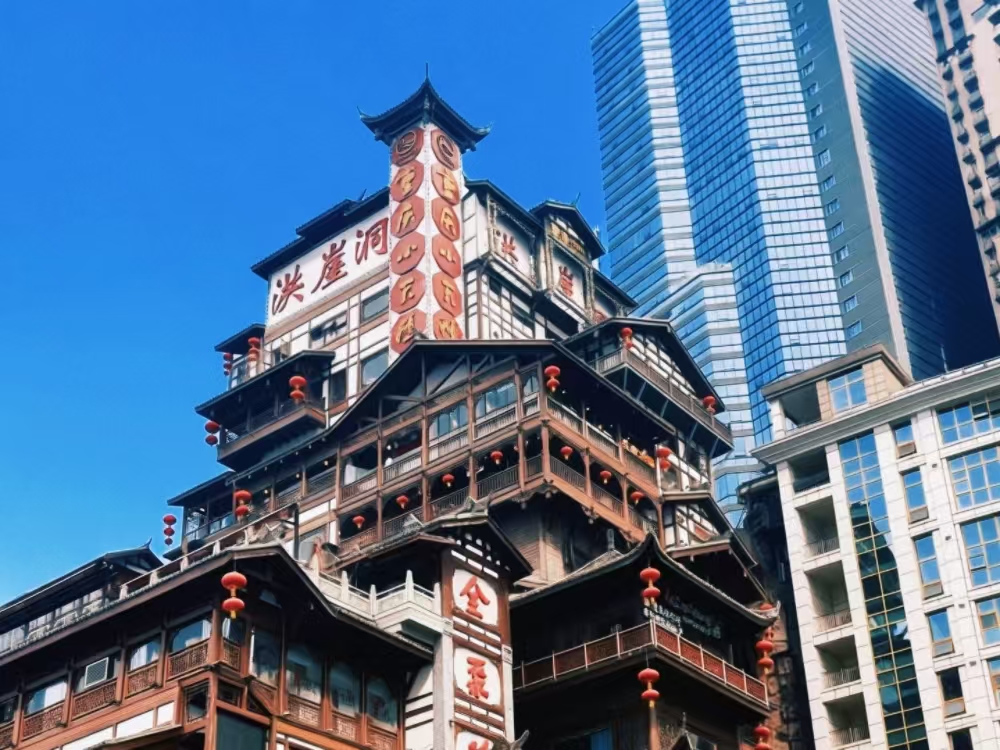
Chongqing: China’s Mountain City Where Streets Go Up and Down
A City Unlike Anywhere Else in China
When many travelers imagine China, they often picture the ancient palaces of Beijing, the futuristic skyline of Shanghai, or the peaceful landscapes of Guilin. But in southwest China, there is a city that feels completely different from anywhere else — Chongqing.
Known as the “Mountain City” and the “Fog City,” Chongqing is one of the most fascinating urban destinations in China. It is a place where mountains become streets, rivers become part of the city’s identity, and modern skyscrapers rise beside traditional neighborhoods.
In Chongqing, a simple walk can feel like an adventure.
You may leave a subway station and discover that you are already several floors above the street. You may walk across a bridge and suddenly find yourself surrounded by mountains and rivers. You may take a road that appears to go downhill, only to realize that another neighborhood exists underneath you.
This is Chongqing — a city built vertically, shaped by nature, and full of surprises.
Unlike many famous cities around the world, Chongqing does not try to look perfect or organized. Instead, it attracts visitors with its unique personality. It is energetic, dramatic, sometimes confusing, but always memorable.
For travelers searching for a different side of China, Chongqing offers an experience that cannot easily be found anywhere else.
Why Is Chongqing Called the “Mountain City”?
The nickname “Mountain City” is not just a poetic description. It is a reflection of Chongqing’s geography and history.
Located in southwest China, Chongqing sits at the meeting point of the Yangtze River and the Jialing River. The surrounding landscape is filled with hills and mountains, creating a natural environment that has influenced every part of city life.
Unlike Beijing or Shanghai, which developed on relatively flat land, Chongqing had very limited space for expansion. Instead of spreading outward, the city grew upward and adapted to the mountains.
The result is a city with multiple levels.
A street that looks like the ground floor may actually be on the tenth floor of another building. A pedestrian bridge may connect two areas that seem completely separated by height. Buildings are designed around hillsides, creating a unique relationship between architecture and nature.
For visitors, this means Chongqing is not simply a place you look at — it is a place you explore.
Every corner offers a different perspective. A small staircase may lead to an old neighborhood. A narrow alley may suddenly open to a spectacular river view. A quiet street may reveal a busy local market full of life.
The mountains are not outside the city.
The mountains are the city.
Chongqing: The World’s Most Fascinating 3D City
One of the first things international visitors notice about Chongqing is that it feels like a three-dimensional city.
Many modern cities are designed with a clear horizontal structure. Streets are flat, buildings stand separately, and navigation is relatively simple.
Chongqing is completely different.
Because of its mountainous terrain, the city developed in layers. Roads, bridges, tunnels, and buildings connect different heights, creating a unique urban landscape.
This is why many people describe Chongqing as a “3D city.”
Walking around Chongqing can sometimes feel like exploring a futuristic movie scene.
A famous example is Liziba Station, where a subway train passes directly through a residential building. For many travelers, this seems impossible at first. However, it is actually a clever example of how Chongqing’s transportation system has adapted to limited urban space.
The train does not simply pass through the city.
It becomes part of the city.
This unusual relationship between transportation and architecture represents Chongqing’s creativity. Instead of fighting against the mountains, the city has learned how to live with them.
In Chongqing, engineering and nature exist together.
Walking Through Chongqing Is an Urban Adventure
One of the best ways to experience Chongqing is on foot.
Unlike cities where sightseeing mainly means visiting famous landmarks, Chongqing itself is part of the attraction.
Walking through the city allows visitors to discover the unexpected.
You might climb a long staircase and find a peaceful residential area. You might follow a small path between buildings and discover a traditional tea house. You might turn around while walking uphill and suddenly see a breathtaking view of the river and skyline.
The city’s famous mountain paths and hillside streets reveal the everyday life of local people.
Here, elderly residents sit outside chatting with neighbors. Small restaurants serve bowls of Chongqing noodles. Local shops continue operating in old neighborhoods surrounded by modern skyscrapers.
This mixture of ordinary life and dramatic scenery creates Chongqing’s special charm.
Many travelers visit China searching for ancient culture, but Chongqing offers something different. It shows how history and modern life can exist together in a living city.
The old streets are not museums.
They are still home.
The Rivers That Built Chongqing
To understand Chongqing, you must understand its rivers.
The city stands beside two important waterways: the Yangtze River, China’s longest river, and the Jialing River, which flows through the heart of Chongqing.
For centuries, these rivers shaped the city’s economy, culture, and identity.
Chongqing developed as an important transportation and trading center because of its location along the Yangtze River. The river connected the city with other parts of China and played a major role in regional development.
The relationship between Chongqing and its rivers can still be seen today.
At night, visitors can walk along the riverbanks and watch boats move through the illuminated skyline. The combination of mountains, water, and city lights creates one of the most impressive urban views in China.
The rivers also give Chongqing a sense of openness.
Although the city is surrounded by mountains, the flowing water connects it to the wider world.
The Fog City: Chongqing’s Mysterious Atmosphere
Another famous nickname for Chongqing is the “Fog City.”
The city’s humid climate, surrounded by mountains and rivers, often creates misty weather, especially during certain seasons.
Historically, fog was an important part of Chongqing’s identity. Before modern technology transformed the city, the misty landscape added a mysterious atmosphere to the river port.
Today, the fog continues to create a unique visual experience.
When clouds and mist cover the hills, skyscrapers appear between layers of white air. At night, city lights shine through the fog, creating a scene that feels almost cinematic.
However, Chongqing is not beautiful because of the fog alone.
The fog simply adds another layer to a city that is already full of character.
As locals often say, Chongqing does not hide behind the fog.
The fog reveals another side of Chongqing.
Where Traditional Life Meets Modern China
One of the most attractive things about Chongqing is the way old and new exist together.
The city is home to modern shopping districts, high-rise buildings, and advanced transportation systems. Areas such as Jiefangbei represent Chongqing’s modern identity, with busy streets, luxury stores, restaurants, and entertainment.
But only a short distance away, visitors can find traditional neighborhoods where life moves at a slower pace.
People gather in small tea houses. Families enjoy meals together. Residents chat on street corners. Local markets continue to provide fresh food and daily necessities.
This contrast creates a more authentic travel experience.
Chongqing is not a city where the past has disappeared.
Instead, history continues to live beside modern development.
A visitor can spend the morning exploring old streets, enjoy a traditional meal at lunchtime, and watch a futuristic skyline glowing above the rivers at night.
Few cities in China offer such a powerful combination.
Why Should You Visit Chongqing?
For travelers visiting China, Chongqing offers something different from the country’s better-known destinations.
Beijing introduces visitors to China’s imperial history.
Shanghai shows China’s modern ambition.
Chengdu offers a relaxed lifestyle and famous panda culture.
Chongqing offers a city experience unlike any other.
You should visit Chongqing if you want to:
- Explore a city shaped by mountains and rivers
- Experience one of China’s most exciting food cultures
- Discover local life beyond traditional tourist routes
- Photograph unique urban landscapes
- See how modern China adapts to nature
But perhaps the biggest reason to visit Chongqing is simple:
It feels real.
The city is not designed only for tourists. It is a living place where millions of people work, eat, relax, and create their daily lives.
That authenticity is what makes Chongqing unforgettable.
Final Thoughts: Chongqing Is a City You Feel
Some cities are remembered because of famous monuments.
Others are remembered because of a feeling.
Chongqing belongs to the second category.
It is the feeling of standing above the river and watching the city lights appear. It is the feeling of walking through streets that rise and fall with the mountains. It is the taste of spicy hot pot shared with friends. It is the sound of local conversations in old neighborhoods.
Chongqing is not a city that can be fully understood from photographs.
You need to walk its streets.
You need to taste its food.
You need to experience its rhythm.
Only then will you understand why so many travelers describe Chongqing as one of China’s most unforgettable destinations.
Chongqing is not just a place you visit.
It is a city you experience.