Beijing CBD: Discover the Futuristic Skyline of China’s Capital
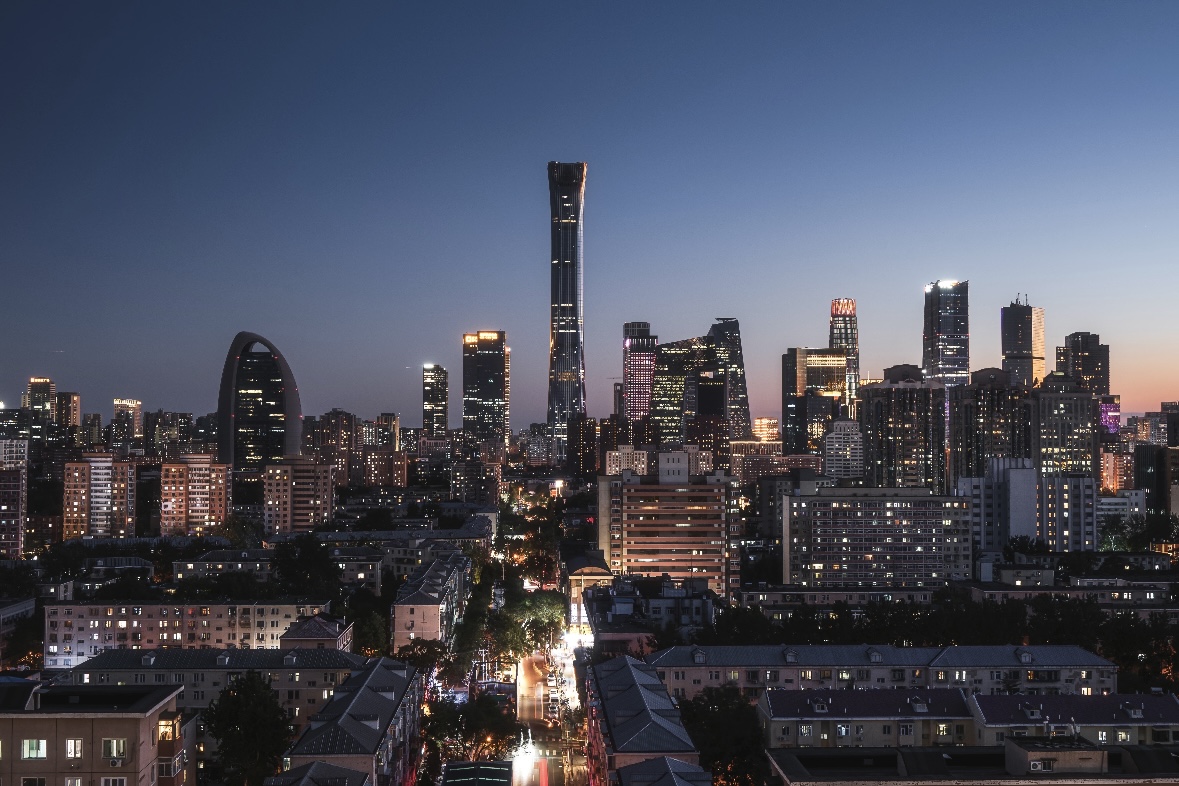
Beijing CBD: Discover the Futuristic Skyline of China’s Capital
The Modern Face of Beijing: Where China’s Future Takes Shape
When many travelers think about Beijing, the first images that come to mind are usually ancient ones.
They imagine walking beneath the golden roofs of the Forbidden City, standing on the Great Wall surrounded by mountains, or wandering through narrow hutongs where traditional courtyard homes preserve memories of old Beijing.
These experiences are unforgettable. They reveal the history, culture, and traditions that have shaped China for centuries.
But there is another Beijing waiting to be discovered.
Beyond the ancient palaces and historic neighborhoods stands a city that looks firmly toward the future — a city of glass skyscrapers, innovative architecture, international businesses, creative spaces, and a rapidly changing urban lifestyle.
At the heart of this transformation is Beijing’s Central Business District, commonly known as the Beijing CBD.
Located in the eastern part of the city, the CBD represents a different side of China’s capital. It is not a place of emperors and ancient ceremonies. Instead, it is a place of global connections, modern design, technological innovation, and the ambitions of a new generation.
For travelers who want to understand the China of today, not only the China of the past, Beijing CBD offers a fascinating journey into the country’s modern identity.
Here, the skyline tells a story.
Every tower, every public space, and every street reflects the transformation of Beijing from an ancient imperial capital into one of the world’s most dynamic cities.
From Imperial Capital to Global Metropolis
Beijing has always been a city of power.
For more than 800 years, it served as the political center of China, hosting dynasties, emperors, and important historical events. The Forbidden City represented imperial authority, while temples and traditional neighborhoods reflected the cultural values of ancient Chinese society.
However, the Beijing of today is experiencing another transformation.
Over the past several decades, China’s rapid economic development has changed the appearance and rhythm of its major cities. Beijing, as the nation’s capital, has become a place where politics, business, technology, education, and international exchange come together.
The development of the Beijing CBD is one of the clearest examples of this transformation.
Before the area became a modern business district, this part of Beijing was mostly residential and industrial. Today, it has become one of the most recognizable urban landscapes in China, attracting multinational companies, financial institutions, luxury hotels, and innovative businesses from around the world.
The CBD is a symbol of a changing Beijing — a city that respects its history while building a vision for the future.
For international visitors, exploring this area provides an opportunity to see how China’s capital functions beyond its famous historical attractions.
Entering Beijing CBD: A Different Side of the City
Arriving at Beijing CBD feels like entering another world.
The traditional image of Beijing — red walls, ancient gates, and historic courtyards — gradually disappears as modern towers rise above the streets.
The first impression is scale.
The buildings are large, impressive, and carefully designed. Wide avenues, modern public spaces, and sophisticated transportation networks create an atmosphere that feels closer to global financial centers such as New York, London, Singapore, or Tokyo.
Yet Beijing CBD has its own unique character.
Unlike many modern business districts around the world, it exists within a city deeply connected to thousands of years of history.
A traveler can spend the morning exploring imperial architecture and later watch the sunset between futuristic skyscrapers.
This contrast is one of Beijing’s greatest attractions.
The city does not separate the old and the new. Instead, both exist side by side.
The Iconic CCTV Headquarters: A Landmark of Modern Beijing
Among all the buildings in Beijing CBD, one structure stands out immediately.
The CCTV Headquarters is perhaps the most recognizable symbol of contemporary Beijing.
Designed by the renowned architectural firm OMA and architect Rem Koolhaas, the building challenges traditional ideas about skyscrapers.
Instead of rising vertically like a typical tower, the structure forms a dramatic loop consisting of two leaning towers connected by a large horizontal section at the top.
To many visitors, it appears almost impossible — a giant architectural sculpture floating above the city.
Locals often refer to it simply as the “CCTV Building,” and it has become one of the most photographed modern landmarks in Beijing.
But the building represents more than unusual design.
It reflects a new confidence in Chinese architecture.
For much of history, Chinese architecture was associated with traditional forms: wooden structures, symmetrical courtyards, curved roofs, and harmony with nature.
The CCTV Headquarters shows another side of China — one that embraces experimentation, technology, and global architectural dialogue.
Standing beneath the building, visitors can feel the ambition behind modern Beijing.
It represents a city that is not only preserving its past but also creating symbols for the future.
Experiencing the CCTV Headquarters as a Traveler
Although visitors cannot freely explore all areas inside the building because it functions as a working headquarters, the surrounding area provides excellent opportunities for sightseeing and photography.
The best time to visit is usually late afternoon when sunlight reflects against the glass surface and the building begins to glow.
At night, the surrounding CBD becomes even more impressive.
The lights of nearby towers create a futuristic atmosphere, and the area becomes a perfect place for travelers who enjoy urban photography.
For photographers, several perspectives are worth exploring:
- The wide streets around the building provide dramatic views of its unique shape.
- Nearby bridges and open spaces offer reflections of the skyline.
- Evening hours create beautiful contrasts between light and architecture.
Unlike historical attractions where visitors mainly observe the past, Beijing CBD allows travelers to witness a city actively creating its future.
China World Trade Center: Beijing’s Global Gateway
Another important landmark in the CBD is the China World Trade Center.
Often considered the heart of Beijing’s international business community, the complex includes offices, shopping areas, hotels, and entertainment spaces.
For international travelers, this area provides a glimpse into Beijing’s global connections.
Luxury hotels welcome visitors from around the world. International brands share space with Chinese companies. Business travelers, entrepreneurs, and tourists move through the same streets.
The China World Trade Center represents Beijing’s role as a meeting point between China and the rest of the world.
However, the area is not only for business travelers.
Visitors can enjoy modern shopping centers, restaurants, cafés, and impressive city views.
One of the best ways to experience the CBD is simply to walk.
Modern cities are often understood through their streets — through the people moving between buildings, the cafés where conversations happen, and the public spaces where daily life unfolds.
The Beijing CBD tells the story of a city connected to the world.
Walking Through Beijing CBD: Seeing Modern China in Everyday Life
Many travelers make the mistake of thinking that modern districts are only interesting for business people.
They imagine office towers, financial companies, and busy professionals rushing between meetings. While this is certainly part of Beijing CBD’s identity, the area offers much more than that.
For visitors, the most rewarding way to experience the CBD is to slow down and explore it on foot.
Walking through the district reveals the everyday life behind the impressive skyline.
During weekday mornings, the streets become filled with energy. Thousands of professionals arrive at offices, cafés open their doors, and commuters move through the area with a sense of purpose.
This daily rhythm shows another side of Beijing — a city that is not only a historical capital but also a modern workplace for millions of people.
At lunchtime, restaurants and cafés become lively gathering places. Young professionals meet with colleagues, business conversations happen over coffee, and international visitors experience the fast-paced lifestyle of contemporary China.
In the evening, the atmosphere changes completely.
The office buildings begin to light up, streets become calmer, and the skyline transforms into one of Beijing’s most beautiful urban scenes.
For travelers, this is when the CBD reveals its true charm.
The combination of architecture, lights, and movement creates a feeling of being inside a modern Chinese city of the future.
A City Where Technology Shapes Daily Life
One of the most fascinating aspects of modern Beijing is how technology has become integrated into everyday life.
The CBD is a perfect place to observe this transformation.
Visitors will notice that many aspects of urban life are supported by digital technology. Transportation, shopping, dining, and communication have all changed dramatically in recent years.
Mobile payment systems allow people to purchase almost anything without cash. Smart transportation networks make moving around the city more convenient. Digital services connect residents to restaurants, shops, and entertainment.
For travelers coming from countries where these systems may be less common, experiencing Beijing’s digital lifestyle can be one of the most memorable parts of the journey.
The CBD represents a future-oriented urban environment where technology is not separate from daily life — it is naturally integrated into it.
This is an important part of understanding modern China.
Many visitors arrive expecting to see an ancient civilization, but they leave discovering one of the world’s most technologically advanced urban societies.
Modern Architecture and Chinese Identity
One of the most interesting questions about Beijing CBD is how modern architecture fits into a city with such a long history.
At first glance, glass skyscrapers and traditional Chinese buildings may seem completely different.
One represents the future, while the other represents the past.
But Beijing’s identity has always been built on combining different influences.
Traditional Chinese philosophy often emphasizes balance and harmony. Modern Beijing reflects a similar idea: the city continues to evolve while maintaining connections with its cultural roots.
The skyscrapers of the CBD do not replace the Forbidden City. They represent another chapter of Beijing’s story.
The city’s development shows that preserving history does not mean refusing change.
Instead, Beijing demonstrates that an ancient city can continue to grow, innovate, and redefine itself.
For international travelers, this relationship between tradition and modernity is one of the most fascinating things about visiting the capital.
The Best Views of Beijing’s Modern Skyline
For travelers who want to appreciate Beijing CBD from different perspectives, there are several excellent ways to experience the skyline.
Sunset Views
Late afternoon is one of the best times to visit.
As the sun begins to disappear, the glass surfaces of skyscrapers reflect warm light, creating dramatic colors across the city.
This is also the perfect moment for photography.
The contrast between the golden evening sky and the modern buildings creates some of the most memorable images of contemporary Beijing.
Night Photography
After dark, Beijing CBD becomes a completely different place.
The illuminated towers create a futuristic atmosphere that feels almost cinematic.
Travelers who enjoy city photography will find endless opportunities:
- reflections on glass buildings;
- colorful lights across the skyline;
- busy streets beneath towering architecture;
- long-exposure shots of urban movement.
The night view demonstrates another side of Beijing — energetic, modern, and full of possibilities.
Rooftop Experiences
For those who want a higher perspective, some hotels and restaurants around the CBD offer impressive views of the city.
Looking across Beijing from above allows visitors to understand the scale of this enormous metropolis.
From this viewpoint, the contrast becomes clear:
ancient neighborhoods stretch across the city, while modern towers rise toward the sky.
This is Beijing’s unique urban landscape.
Beyond Buildings: The Lifestyle of Modern Beijing
A city is not defined only by its architecture.
The true character of Beijing CBD comes from the people who live, work, and spend time there.
Modern Beijing represents a younger generation of Chinese citizens who are globally connected, highly educated, and comfortable moving between different cultures.
In the CBD, visitors can observe this lifestyle through:
- young professionals working in international companies;
- entrepreneurs developing new ideas;
- designers and creatives creating new products;
- travelers from different countries meeting in cafés and restaurants.
This multicultural atmosphere makes the CBD different from traditional tourist areas.
Instead of simply observing history, visitors become part of the current story of Beijing.
They experience how people live today.
Food and Dining in Beijing CBD
Exploring a modern city is incomplete without experiencing its food culture.
Beijing CBD offers a wide variety of dining experiences, from traditional Chinese restaurants to international cuisine.
Travelers can enjoy classic Beijing dishes while also discovering contemporary interpretations of Chinese flavors.
Many modern restaurants combine traditional ingredients with creative cooking techniques, creating a new generation of Chinese cuisine.
The area also has numerous cafés, bakeries, and stylish restaurants where visitors can relax after exploring the city.
One of the pleasures of modern Beijing is the ability to experience different worlds within the same day.
A traveler might enjoy traditional noodles in an old neighborhood at lunchtime and have a modern dining experience surrounded by skyscrapers in the evening.
This combination of tradition and innovation is what makes Beijing’s food scene unique.
How to Visit Beijing CBD: A Traveler’s Guide
Best Time to Visit
The CBD can be visited throughout the year, but spring and autumn are generally the most comfortable seasons for walking.
During these months, the weather is pleasant, and the skies are often clearer, creating better conditions for photography.
Evening visits are especially recommended because the skyline becomes more impressive after sunset.
How Much Time Do You Need?
A first-time visitor can explore the main highlights of Beijing CBD in half a day.
A suggested route:
Afternoon
- Arrive at the CBD area
- Explore the skyscrapers and public spaces
- Visit the area around CCTV Headquarters
Evening
- Enjoy dinner nearby
- Watch the skyline light up
- Take night photos
For travelers interested in architecture, photography, or modern urban culture, spending a full day allows a deeper experience.
How to Get There
Beijing CBD is easily accessible by the city’s extensive subway system.
The area is connected by several subway stations, making it convenient for international visitors.
Using public transportation is also an opportunity to experience how millions of Beijing residents move through the city every day.
Why Beijing CBD Should Be on Your Beijing Travel List
Many visitors come to Beijing searching for history.
They want to see ancient gates, imperial palaces, and cultural traditions.
And they should.
But understanding Beijing today requires seeing another side of the city.
The Beijing CBD represents the energy, creativity, and ambition of modern China.
It is a place where:
- futuristic architecture rises above an ancient capital;
- technology shapes everyday life;
- international cultures meet;
- new ideas are constantly being created.
The CBD is not simply a collection of skyscrapers.
It is a symbol of transformation.
It tells the story of how Beijing has moved from an imperial capital to a global city while continuing to carry the memories of its past.
For travelers who want to discover the real Beijing — not only the Beijing of history books but the Beijing of today — the CBD offers an unforgettable experience.
Standing among the towers of the city’s modern skyline, watching the lights appear as evening falls, visitors can feel something unique:
Beijing is not a city looking backward.
It is a city building the future.