Walking Through Old Chengdu: Discover Historic Streets, Ancient Alleys, and the Living Culture of Sichuan
Walking Through Old Chengdu: Discover Historic Streets, Ancient Alleys, and the Living Culture of Sichuan
Walking Through Old Chengdu: Discover Historic Streets, Ancient Alleys, and the Living Culture of Sichuan
Step Into the Chengdu That Time Has Never Forgotten
Some cities preserve history inside museums.
Others allow history to continue living on their streets.
Chengdu belongs to the second kind.
Walking through the old neighborhoods of Chengdu feels like opening a window into another time. Traditional courtyards, quiet alleys, ancient temples, local tea houses, and family-run shops tell stories that have been passed down through generations.
But what makes old Chengdu truly special is that it is not a place frozen in the past.
It is still alive.
People still gather in traditional tea houses.
Local residents still walk through historic streets every day.
Old traditions continue alongside modern lifestyles.
Here, history is not something you simply look at.
It is something you experience.
The Soul of Old Chengdu: Where History Meets Everyday Life
Chengdu has a history stretching back more than two thousand years.
Throughout centuries, it has been a center of culture, trade, and creativity in southwest China.
The city has witnessed the rise of ancient kingdoms, the development of Sichuan culture, and the continuation of traditions that remain important today.
But the beauty of Chengdu’s history is not only found in grand monuments.
It can be discovered in small details.
The design of an old courtyard.
The sound of footsteps on stone streets.
The smell of traditional snacks from a neighborhood shop.
The conversations happening inside a tea house.
These ordinary moments create a special connection between past and present.
For visitors, exploring old Chengdu is not just about learning history.
It is about feeling the atmosphere of a city that remembers where it came from.
Kuanzhai Alley: A Journey into Traditional Chengdu
Among all the historic neighborhoods in Chengdu, Kuanzhai Alley is one of the most famous.
The name means “Wide and Narrow Alleys,” referring to the two main lanes that make up this historic area.
Originally developed during the Qing Dynasty, Kuanzhai Alley preserves traditional courtyard architecture and the unique street atmosphere of old Chengdu.
Walking through the area, visitors can discover a beautiful combination of history and modern creativity.
Traditional buildings stand beside stylish cafés.
Local snacks are served near cultural shops.
Old architectural details appear alongside contemporary designs.
This contrast creates the charm of Kuanzhai Alley.
It represents Chengdu’s ability to protect its heritage while allowing new ideas to grow.
Experience the Everyday Beauty of Kuanzhai Alley
The best way to enjoy Kuanzhai Alley is not to rush.
Take your time.
Walk slowly through the narrow streets.
Look at the traditional wooden doors.
Explore small shops.
Stop for tea or local snacks.
Observe the details.
A beautiful part of Chengdu’s culture is that it encourages visitors to slow down and appreciate small moments.
In Kuanzhai Alley, you may discover traditional crafts, Sichuan flavors, and stories hidden behind old walls.
The experience is not only about taking photos.
It is about connecting with the atmosphere of old Chengdu.
Jinli Ancient Street: A Colorful Window into Sichuan Culture
Another place where visitors can experience Chengdu’s traditional charm is Jinli Ancient Street.
Located near Wuhou Shrine, Jinli combines history, food, architecture, and local culture.
With traditional-style buildings, red lanterns, and lively streets, Jinli creates a memorable atmosphere, especially in the evening when lights illuminate the area.
Walking through Jinli feels like entering a traditional Sichuan story.
Visitors can discover local handicrafts, taste regional snacks, and experience cultural performances.
The street is especially popular among travelers because it brings together many elements of Chengdu culture in one place.
But beyond the beautiful architecture and colorful atmosphere, Jinli represents something deeper.
It shows how traditional culture continues to be shared with new generations and visitors from around the world.
Wuhou Shrine: Following the Stories of Ancient China
For travelers interested in Chinese history, Wuhou Shrine is one of Chengdu’s most meaningful cultural destinations.
The shrine is connected with the famous Three Kingdoms period, one of the most fascinating chapters in Chinese history.
The stories of loyalty, strategy, friendship, and leadership from this era have been passed down for centuries and remain an important part of Chinese culture.
Walking through Wuhou Shrine, visitors can explore ancient buildings, peaceful gardens, and historical stories connected with famous figures such as Zhuge Liang and Liu Bei.
But the experience is not only about history.
The peaceful environment allows visitors to reflect on the values that have shaped Chinese culture for generations.
For international travelers, Wuhou Shrine provides a deeper understanding of China’s relationship with history and storytelling.
Wenshu Monastery: A Quiet Corner of Ancient Chengdu
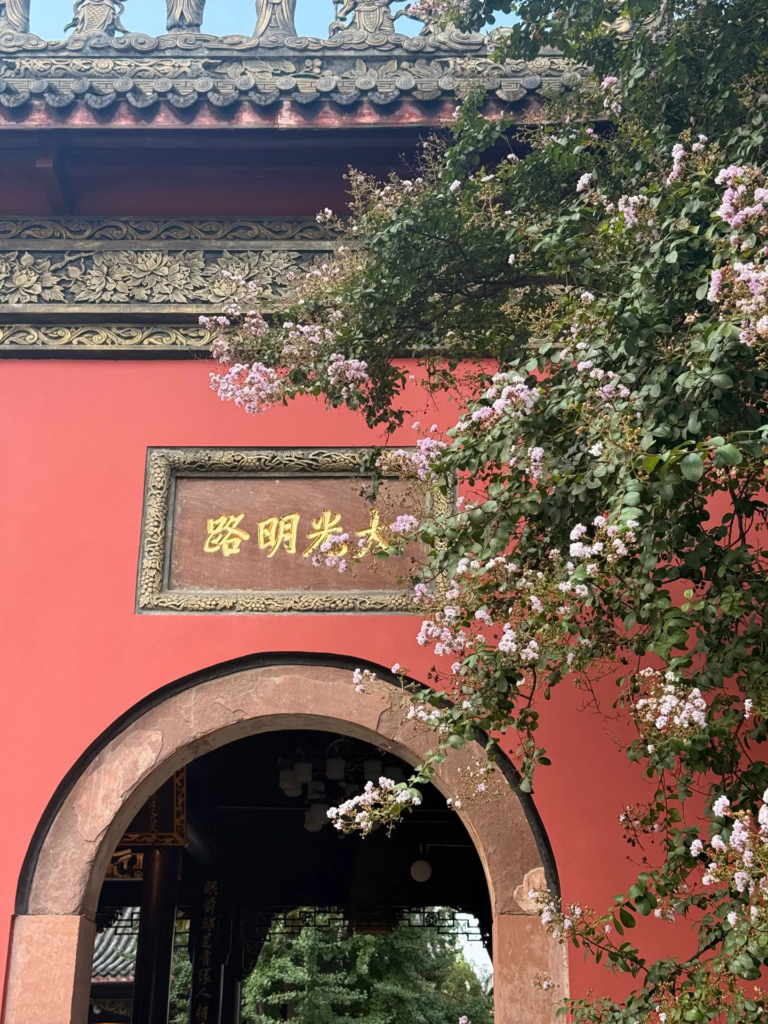
Among Chengdu’s historic sites, Wenshu Monastery offers a completely different experience.
While some areas of the city are energetic and lively, Wenshu Monastery creates a feeling of peace and calm.
Founded more than a thousand years ago, this Buddhist temple is one of the most important religious sites in Chengdu.
Visitors can walk through traditional halls, peaceful gardens, and quiet courtyards while experiencing a different rhythm of life.
The sound of temple bells.
The smell of incense.
The beauty of traditional architecture.
The peaceful atmosphere.
Everything encourages visitors to slow down.
Around the monastery, travelers can also discover traditional restaurants, tea houses, and local streets that reflect the everyday culture of Chengdu.
It is a place where spirituality, history, and local life come together.
Traditional Architecture: Stories Hidden in Every Detail
One of the most fascinating parts of exploring old Chengdu is discovering traditional architecture.
Unlike monumental buildings that immediately attract attention, many of Chengdu’s historical treasures are found in subtle details.
Wooden doors.
Courtyard gardens.
Traditional roofs.
Stone pathways.
These elements reveal how people lived in the past.
Traditional Sichuan architecture was designed around ideas of harmony, family connection, and adaptation to the local environment.
Courtyard homes created spaces where families could gather together.
Open designs allowed natural light and air to flow.
Gardens created peaceful areas within the home.
For visitors, these architectural details provide a deeper understanding of traditional Chinese lifestyles.
Old Chengdu After Sunset: A Different Kind of Beauty
Many travelers discover that Chengdu’s historic areas become even more charming after sunset.
Warm lights illuminate old buildings.
Lanterns create a traditional atmosphere.
Local restaurants become lively.
People gather for dinner and conversation.
The streets feel energetic but relaxed.
Unlike places that become empty after visitors leave, many parts of old Chengdu continue to function as real communities.
People still live here.
People still eat here.
People still meet here.
This is what makes Chengdu’s historic neighborhoods special.
They are not just attractions.
They are living spaces.
Discovering Chengdu Through Walking
One of the best ways to experience old Chengdu is simply by walking.
Walking allows travelers to notice details that are easy to miss.
A small family restaurant hidden in an alley.
A local resident enjoying tea.
A traditional craft shop.
A quiet temple entrance.
A street corner full of everyday stories.
Slow walking creates deeper connections with a city.
It allows visitors to experience Chengdu not as a checklist of attractions but as a place with its own personality.
Why Old Chengdu Is a Must-Experience for International Travelers
For many visitors, China’s history can feel enormous.
Thousands of years of civilization.
Countless stories.
Many different traditions.
But old Chengdu makes this history feel personal.
Instead of simply learning facts, visitors can experience the atmosphere.
They can walk through streets where generations have lived.
They can taste food connected to local traditions.
They can enter spaces where culture continues naturally.
This is the true beauty of old Chengdu.
It makes history feel alive.
Final Thoughts: A Walk Through Time, A Memory for Life
Old Chengdu is not only about ancient buildings.
It is about the relationship between past and present.
It is about traditions that continue.
It is about stories shared between generations.
It is about a city that respects its history while continuing to grow.
For travelers searching for authentic cultural experiences, walking through old Chengdu offers one of the most rewarding journeys in China.
Take a slow walk.
Listen to the sounds of the streets.
Taste the flavors of Sichuan.
Discover the stories behind the walls.
Because in Chengdu, the past is never truly gone.
It is still here.
Still living.
Still waiting to be discovered.
Old Chengdu is not a place you simply visit.
It is a story you slowly walk into.